
Workplace edition
A wellness program people actually watch.
For HR, People and Culture, benefits and workplace wellbeing leaders: evidence-based mental health education that builds connection and makes asking for help ordinary — for teams, the managers who lead them and the families they go home to. It works alongside your EAP, not instead of it.
Already a CCT user? Sign in
Stories open hearts.
People stop defending and start recognizing.
Brain science builds understanding.
Knowing why you feel it makes it manageable.
Practical tools build confidence.
Understanding without a next step fades.
Community creates lasting change.
Alone it is insight. Together it is culture.
What it looks like at work
An hour together, then short pieces people can pick up between meetings. Turnkey: everything is ready to run, and no clinical training is required.

Where teams gather
Team meetings, trainings, employee events, ERGs or company-wide wellbeing programs.
How it fits the workday
Watch together or in chapters, then continue with guided conversations and self-paced activities.
Who can lead it
HR and benefits teams, wellness leaders, ERG leaders or other group leaders. No clinical training required.
What a license gives your workplace
Four film programs and everything an HR or wellness lead needs to run them, in one secure dashboard. Licenses can extend to the families people go home to.
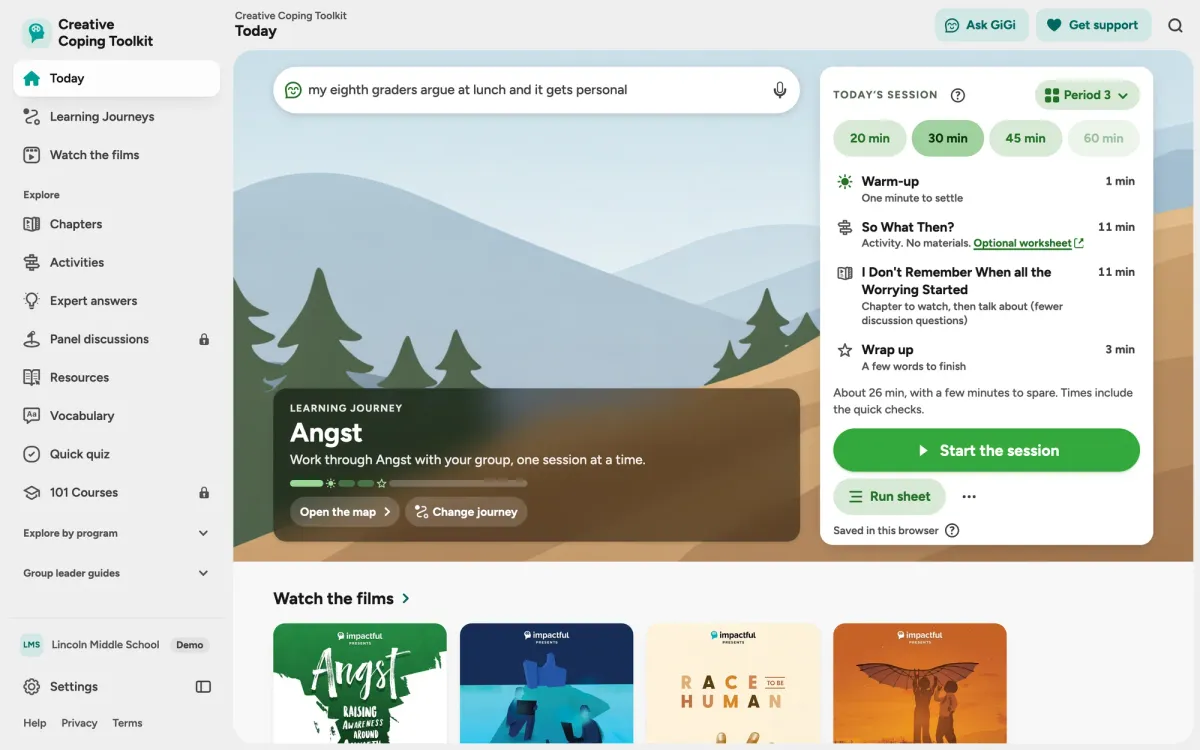
Four film programs
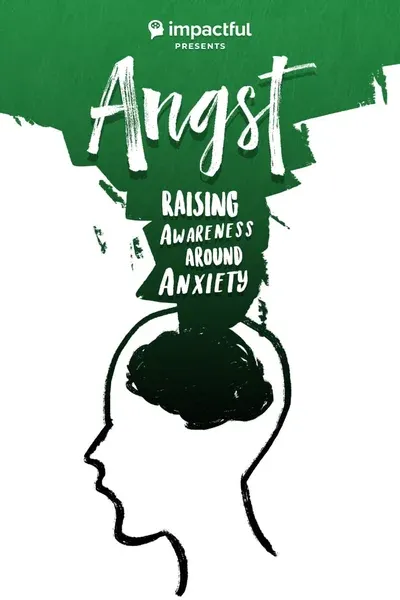
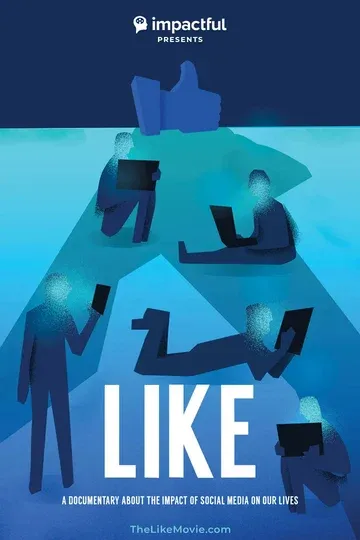
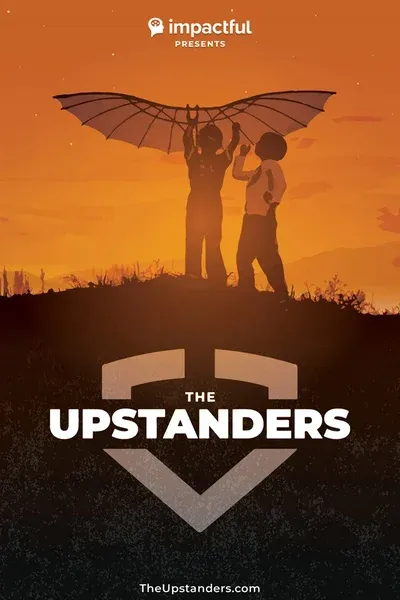
Angst, LIKE, Upstanders and Race to Be Human — each under an hour, licensed on its own or bundled together.
The Learning Journey
A guided path through a whole program: the film, the activities, the expert answers and the quick checks, step by step.
Chapters
The films in short chapter modules, each with prompts for reflection and discussion — made for workshops and lunch-and-learns.
Activities
Guided Activities grounded in CBT and emotional intelligence frameworks, useful for learning and development as well as wellness.
Expert answers
Short videos in which experts answer the questions real viewers asked.
Guides and reports
Group leader guides for HR teams and whoever leads a session, plus engagement reports that show your totals, never one person’s activity.
The four film programs
License separately or bundle together


GiGi, a guide to the toolkit
Built on our knowledge base, GiGi is the toolkit’s AI guide: it helps people find their way around the programs and the topics they cover, in English and Spanish. GiGi is not a mental health professional, therapist or crisis service. When words suggest someone may be in danger, it shows crisis lines instead of answering. Every adult in your organization can use it, and conversations stay on their own device.
*Included with your license, and with the free demo up to a monthly limit. GiGi is available to every adult in your organization; your program managers can limit the chat to program managers who sign in.
The questions a wellness lead asks first
Short answers on how it fits, how people get to it, what you can report and how far it scales.
It fits what you already run
The CCT slots into an existing benefits or wellness program, or stands on its own, and can point your people to your own resources, like your EAP.
How people get to it
The license comes with a community link and its QR code, to share by email, on your intranet or on a poster. People open it without signing in.
You can show what happened
Engagement reports show how much each program is used. They show totals only, never one person’s activity, and people are never asked for their names.
Any size
We work with organizations of every size, from small teams to global employers.
How licensing works
A 24-hour screening license for a single event, a one-month program, or annual and multi-year licenses for the whole organization. Pricing follows the size of your community, and access can extend to families.
Who helped build it
The programs and activities were shaped with Dr. James Doty of CCARE at Stanford, Seattle Children’s Hospital, the Child Mind Institute, Healthy Minds at the University of Wisconsin and Common Sense — many of whom appear in the films.
Remote teams too
People watching from home have engaged as deeply as the ones together in a room — often watching more than once, with someone else, so there is a conversation afterwards.
Why organizations invest
Even before the pandemic, depression and anxiety were costing the global economy over $1 trillion annually in lost productivity, the World Health Organization reported (opens in a new tab). By the time someone calls the EAP, they have usually been struggling for months — a film reaches them sooner, because someone who would never book an appointment will still watch one with their team. And once they had watched, people reached out: to a colleague, to the EAP, to a doctor.
$4
returned for every $1 invested in mental health support, through improved health and performance. World Health Organization, 2016.
30,000
people reached in the first year at one large employer — mostly by word of mouth.









“Angst had a huge ripple down effect… it has probably saved a couple of lives within our organization as it got people to reach out and start talking.”
“I sincerely can’t thank you enough for all your help. Your team pivoted every which way to help us successfully deliver LIKE to our team members. Thank you for being such outstanding partners.”
Questions workplace teams ask before they buy
Does this replace our EAP?
No. It works alongside your EAP, not instead of it. This is mental health education, not clinical treatment or crisis care — and by the time someone calls the EAP they have usually been struggling for months. A film reaches them sooner, because someone who would never book an appointment will still watch one with their team.
How much time does it take out of the workday?
An hour together for the film, then short pieces people pick up between meetings: chapter modules, guided activities and expert answers. Teams run it in meetings, trainings, employee events, ERGs or a company-wide wellbeing program.
Can remote and hybrid teams take part?
Yes. People watching from home have engaged as deeply as the ones together in a room, often watching more than once, with someone else, so there is a conversation afterwards. Licenses can also extend to the families people go home to.
What can we report to leadership afterwards?
Engagement reports show how much each program is used, in totals only: never who took part, one person’s activity or who opened Get support. People using your community link never sign in and are never asked for their names; your program managers sign in to see the reports.
For your IT, security and privacy review, see our security and accessibility statement.
See the Toolkit for yourself
Previews of all four programs, the full group leader guides and a sample engagement report. Free, with no payment details, and nothing ends on a date.
Already a CCT user? Sign in